
Blog: Wifi killed the BBC radio car
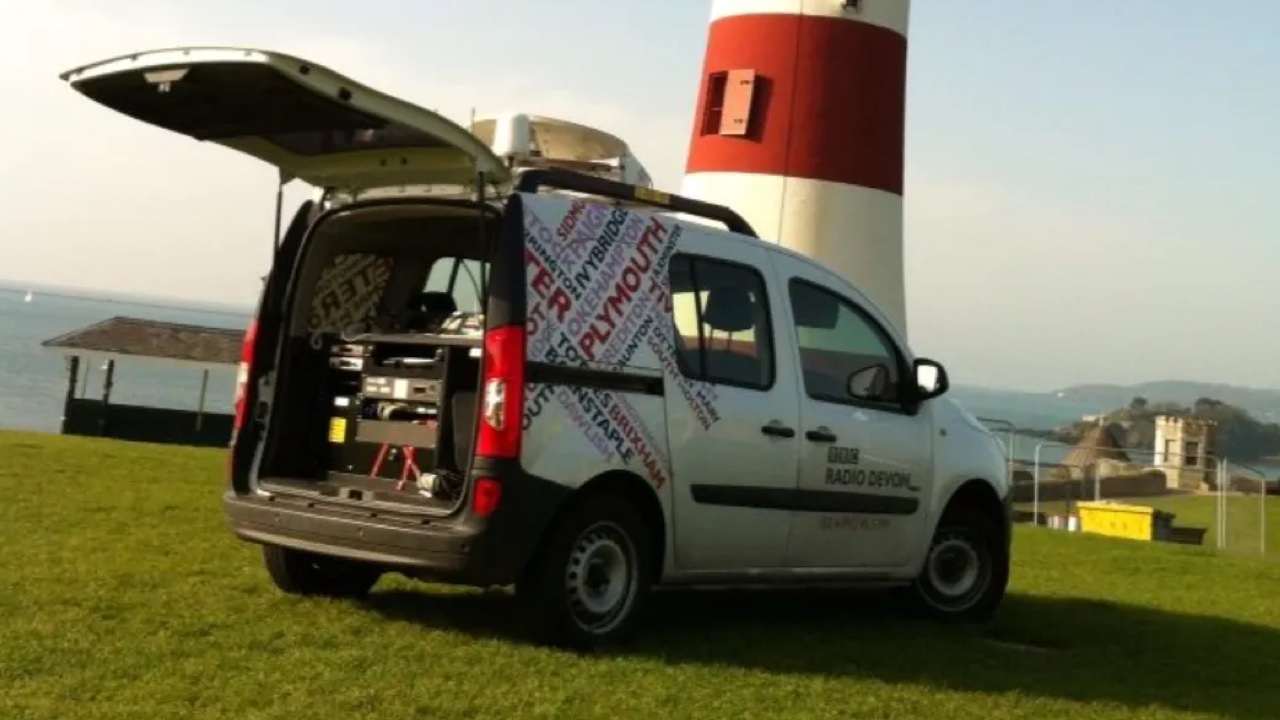
The BBC Radio Car is being discontinued as an on-demand service, but will still be used on occasions, RadioToday understands.
In reaction to this move, Kevin Stanley, a former BBC Journalist who now works as a freelance communications consultant, teacher and trainer, shares his thoughts.
“There are many things about the modern world of broadcast that make an old hack like me feel even older. Technology changes at such a rapid pace, meaning you either have to adapt to it or risk becoming a dinosaur. But during my 27 year career at the BBC, there was one constant bit of technology; a solid, reliable beast that would never let you down. Well, actually, often it did. I refer of course to the trusty Radio Car.
That fresh faced reporter is me in 1998, when I had hair and always wore a suit for work. The mark in the middle of the photo is a staple, because yes, I was a centrefold… in The Journalist magazine. It doesn’t get more glamorous than that.
This pique of nostalgia has come about because the BBC Radio Car is being retired from daily service. Newer versions, known as the Verv (Versatile Vehicle), are still knocking about, but are quickly becoming obsolete, largely because you can now get a broadcast quality signal from just about any phone.
But for decades, the Radio Car was the way to get on air from location. They consisted of a regular car kitted out with an extendable mast, heavily weighted down in the middle of the vehicle. Around the mast was an array of electronics that seemed like an aircraft cockpit to the untrained eye. Yet the theory behind the Radio Car was that any old fool could operate it without the assistance of an engineer. When it came down to it, it was basically three buttons; one to raise and lower the mast, a second to switch on the UHF transmitter and a third to connect the microphone. A mixing panel was usually added to enable multiple mics to be connected.
But although these were “simple” bits of kit from a technological point of view, they created all kinds of nightmares for colleagues who used them over the years. Before you were even allowed to hold the keys, there was a strict lesson from a senior engineer, warning of how the tip of the mast could electrocute you if you touched it, or it touched an overhead power line. You had to learn and memorise the safe operating distances from wires, recite at least three types of weather where you wouldn’t put the mast up and remember what to do and who to call if something went wrong.
What wasn’t included in the tutorial and the subsequent test was how to drive the thing. Many journalists are used to handling the smallest of cars. An estate or people carrier with bonkers weight distribution, not to mention thousands of pounds worth of equipment on board, was another thing entirely. A light dusting of snow or a muddy field could soon land you in trouble.
And the whole point was that these cars could, in theory, go anywhere. Farms, country shows, canal towpaths, airport runways (well, maybe not), the car took the reporter to the heart of the action.
The more modern Verv model, picture above, dispensed with the clunky extendable mast and replaced it with a satellite dish. Backed up by a 4G multi channel Comrex, it was supposedly easier to operate and more reliable. However, satellites need a specific line of sight, and you could often spend a good 20 minutes waiting for the dish to spin around and align itself.
And that was the biggest challenge – getting to a location in good time to set up and get on the air. A breakfast shift would often include going to more than one place, and producers were notoriously bad at building in enough travel and preparation time. You’d often be ringing the doorbell of a remote house just moments before being on air, trying to simultaneously talk to the producer at base while explaining to a little old lady how live radio worked. More than once I have concluded a broadcast only for the contributor to ask : “When will that be on the radio?” Erm, it just was!
On the road itself could also be a real experience. Some motorists would kindly let you through a traffic jam, others were less impressed by the idiot in the big car labelled BBC who was negotiating a parking place over a high kerb. As a journalist, of course, you were expected to be fearless. I recall one colleague racing back to base with a recording (the Radio Car having failed) and complaining that it would only do 80 miles per hour. Contrary to popular belief, tickets were issued in such circumstances and it was the journalist, not the BBC, who had to pay the fine.
While the Radio Car was sometime a great advert for your station, it also made you a moving target. Not all of the stories you covered were good news. A murder, for instance, is a great juicy story for a journalist, but a nightmare if you wanted to keep things low key. While the local newspaper reporter was discretely knocking on doors for comment, you were being surrounded by local kids who would try and get near the car, have a look inside, or nick a spare microphone. This would frequently happen, of course, while you were in the middle of a live broadcast, meaning you had limited opportunities to deter them. Worse still would be the adults, who might be especially annoyed that you were sniffing around their neighbourhood for the grim facts of what had happened.
When BBC Local Radio was reconfigured massively cut in 2023, one particular daily shift was conspicuous by its absence. Almost every station had a Radio Car reporter, usually working from 6am, serving the breakfast and mid morning shows. As the NUJ Nations and Regions rep I questioned why this boots on the ground resource – the one reporter rooted in its communities – was being scrapped. A range of excuses was given, none of which made sense. However, we were also told at the time that even the newer Verv cars were reaching the end of their useful lives and would not be replaced. The scene was set for the end of the Radio Car.
Today, almost everything is done via a WhatsApp call, which is not only cheap (or free with WiFi) but can be done by the contributor. There is no longer any need for a reporter to be present. And yes, some may say it doesn’t sound the same (it doesn’t, it’s often better), but it’s hard to think of a justification for a lumpy bit of kit that costs around £70,000 and sits in a car park for much of the time.
Doubtless someone will buy one of these old wrecks and preserve it in working order for purposes of nostalgia. Personally, I loved the variety of the reporting, but I disliked driving them around. Many colleagues would agree.”
Kevin has also recently shared his thoughts on the 2000 jobs cuts announced. See more here.